Exams are stressful for almost every student. Even if you’ve studied well, anxiety can affect your performance. The good news is that exam stress and anxiety can be reduced with simple, practical techniques. Learning how to manage stress not only improves exam performance but also keeps you healthy and confident.
This guide explains how to reduce exam stress and anxiety effectively, with step-by-step methods, lifestyle tips, and relaxation techniques.
Why Exam Stress Happens
Exam stress is caused by:
- Fear of failure
- Lack of preparation
- Comparing yourself with others
- High expectations from parents or teachers
- Poor time management
Understanding the cause helps manage stress better.
Signs of Exam Stress
- Frequent headaches or tiredness
- Difficulty sleeping
- Irritability or mood swings
- Forgetting what you studied
- Loss of focus
If you notice these signs, it’s time to act.
Things You Need to Reduce Exam Stress
📋 Stress Management Requirements Table
| Requirement | Purpose |
|---|---|
| Quiet place | Relaxation & focus |
| Planner / timetable | Organized preparation |
| Healthy diet | Mental and physical energy |
| Water & sleep | Reduces fatigue |
| Relaxation techniques | Calm mind |
Step-by-Step Guide to Reduce Exam Stress
Step 1: Prepare Well in Advance
One of the biggest causes of stress is last-minute preparation.
Tips:
- Start early
- Make a study plan
- Break topics into small chunks
- Revise regularly
Preparedness builds confidence and reduces fear.
Step 2: Create a Realistic Study Schedule
Don’t overburden yourself. A balanced schedule reduces stress.
Example Schedule Table
| Time | Activity |
|---|---|
| Morning | Study difficult subject |
| Afternoon | Practice questions |
| Evening | Revision |
| Night | Relaxation |
Include short breaks for your mind to refresh.
Step 3: Practice Relaxation Techniques
Relaxation calms the nervous system and reduces anxiety.
Techniques:
- Deep breathing
- Meditation
- Progressive muscle relaxation
- Visualization of success
Even 5–10 minutes daily works wonders.
Step 4: Maintain a Healthy Lifestyle
Your body and mind are connected.
- Sleep 7–8 hours daily
- Eat brain-healthy foods (nuts, fruits, vegetables)
- Exercise 20–30 minutes daily
- Drink plenty of water
Healthy habits increase energy and reduce stress.
Step 5: Avoid Negative Thoughts
Negative thinking increases anxiety.
- Replace “I can’t do it” with “I will try my best”
- Avoid comparing with others
- Focus on your progress, not perfection
Positive thinking boosts confidence.
Step 6: Take Short Breaks and Rewards
Long study sessions can increase stress.
- Study in 40–50 minute blocks
- Take 5–10 minute breaks
- Reward yourself after completing tasks
Breaks prevent mental fatigue and improve focus.
Step 7: Use Practice and Mock Tests
Familiarity reduces anxiety.
- Solve previous year papers
- Take mock exams at home
- Analyze mistakes and learn from them
Practice builds confidence and reduces fear of unknown questions.
Step 8: Talk About Your Stress
Sharing your concerns reduces mental pressure.
- Talk to friends, family, or mentors
- Discuss topics you find difficult
- Ask for guidance if stuck
Support reduces stress and increases motivation.
Tips to Stay Calm During Exams
- Deep breathing before starting the exam
- Read instructions carefully
- Focus on one question at a time
- Skip and return to tough questions
- Stay positive throughout
A calm mind remembers better and solves problems faster.
Common Mistakes That Increase Stress
❌ Studying non-stop without breaks
❌ Skipping sleep or meals
❌ Panic before exams
❌ Negative self-talk
❌ Ignoring revision
Avoiding these mistakes reduces anxiety immediately.
Frequently Asked Questions (FAQs)
Q1. How can I reduce exam stress quickly?
Take deep breaths, relax, drink water, and focus on one task at a time.
Q2. Can exercise really help in exam stress?
Yes, even short walks or light exercise improve mood and reduce anxiety.
Q3. How long should I study daily without getting stressed?
4–6 focused hours with breaks is optimal.
Conclusion
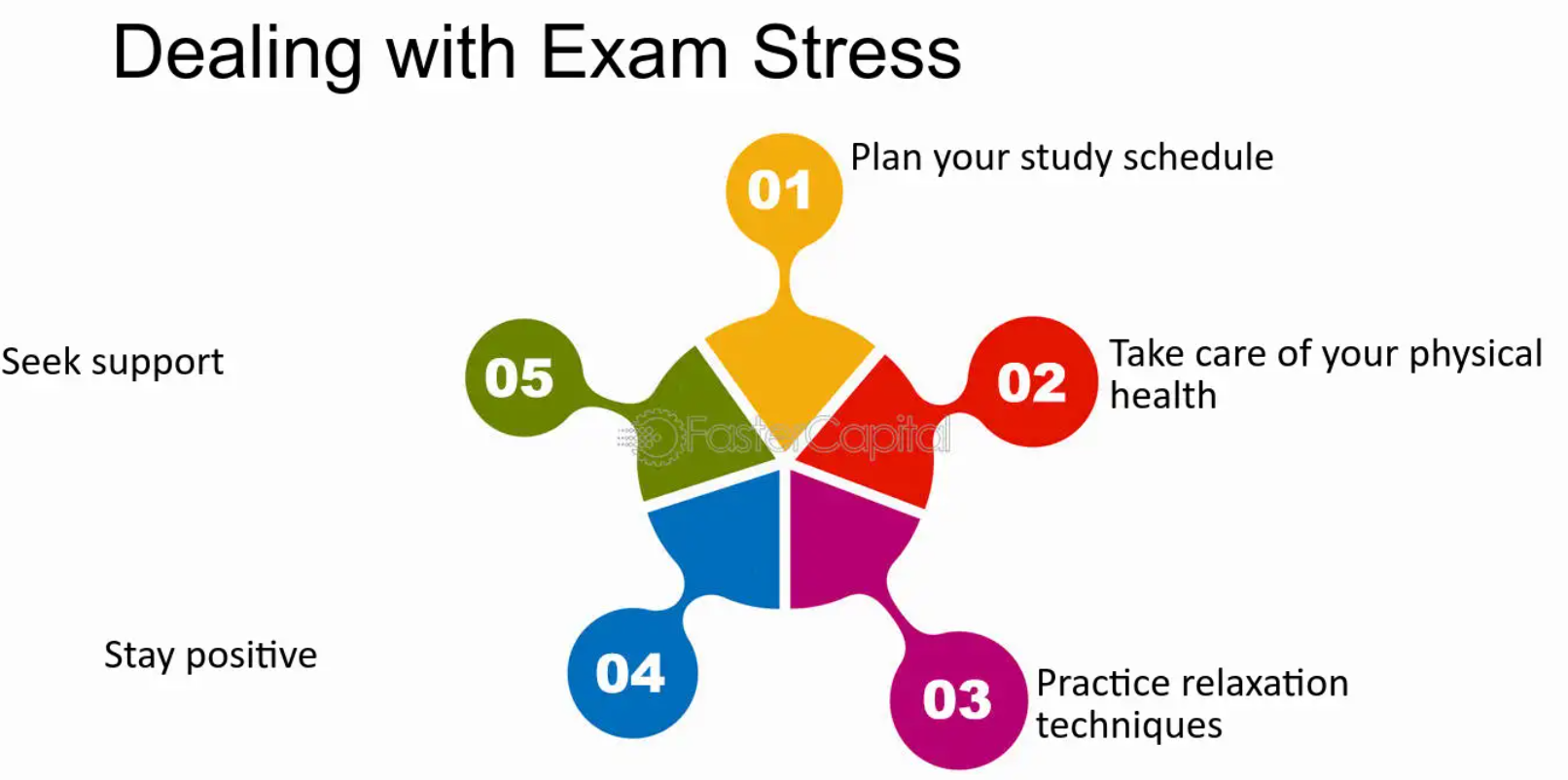
Exam stress is natural, but it doesn’t have to control your performance. By preparing well, following a realistic timetable, practicing relaxation techniques, and maintaining a healthy lifestyle, you can reduce anxiety and stay confident.
Remember:
Calm, focused preparation is better than frantic last-minute cramming.
Start implementing these steps today, and exams will become a challenge you can handle with confidence.